Архив рубрики: ENGLISH TOPICS / Английские топики

Sport

Sport plays a great and important role in our life.

Sports Equipment on WhiteIf you want to be healthy and keep fit you must go in for sports. “If we are healthy, we are wealthy!” says the English proverb. It is necessary to go in for sports regularly, then it does our health good, gives us joy, pleasure and satisfaction. Читать далее Sport

The Third American Expedition to the Moon

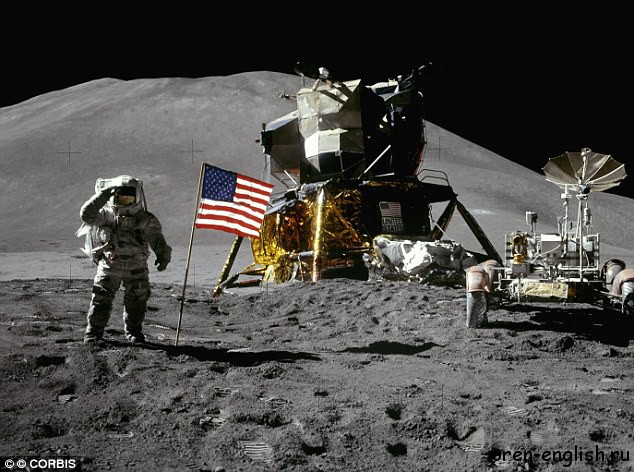
Third American Expedition to the MoonPeople all over the Soviet Union have followed with great interest the flight to the Moon of three American astronauts: Alan Sheppard, Edgar Mitchell and Stuart Roosa. The courageous spacemen have left more than a million kilometers behind them, and are now returning home with new scientific data on the history and the nature of Earth’s satellite, which we have all known for so many centuries, but which we have not known well at all. Читать далее The Third American Expedition to the Moon

Theodore Dreiser (1871-1945)

Theodore Dreiser was born in a small town in the state of Indiana, USA, in a poor family.

After his school years he had to support himself at a laundry, then for several years he was a newspaper reporter in Chicago, Cleveland and Pittsburgh.

Later he moved to New York, where he found work as a magazine editor. His first two novels were “Sister Carrie” (1900) and “Jennie Gerhardt” (1911).

He described the life of two young women in the capitalist world.

His other works are “The Financier” (1912), “The Titan” (1914), “The Stoic” (1915).

Dreiser’s literary work occupies an important place in American literature. His novels and short stories give a true picture of American society.

a laundry — прачечная

Wimbledon

Many Londoners are sports fans. The British Open Tennis Tournament — known as “Wimbledon”, the name of the London suburb where it is played — is the oldest and most famous tennis championship tournament in the world. Other favourite British sports include soccer (which Londoners call football), rugby, horse racing and cricket.

Football is one of the most popular games all over England. The English have played football for many centuries. It is a historical fact that Henry VIII passed a law forbidding men to play football because it took them away from archery. But it didn’t stop football in England.

Rugby Football (or “rugger”) is played with an oval ball which may be carried. It has been called after Rugby School, an English Public school, where football was first played that way. Each team has fifteen players.

Horse Racing. Next to football, the chief spectator sport in English life is horse racing. There are a number of race tracks all over the country, and each of these has a certain number of “meetings” every year, each meeting consisting of several days of racing.

Cricket is an open-air game played with a ball, bats and wickets, between two sides of 11 players each. Cricket may be called the national game of the English. It comes next to football, and a good cricketer is very popular not only among cricket fans.


April Fool’s Day

April Fool’s Day is the first day in April. The fun of April Fool’s Day is to play silly but harmless jokes on family members, co-workers, and friends. The victim of these pranks is called an April fool.

This custom originated in France. When the French first adopted the Gregorian calendar in 1582, some people continued to use the old calendar and to celebrate New Year’s Day on April 1. These people were called April fools. The custom of playing tricks on this day became popular in France and then spread to many other coun­tries. April Fool’s Day jokes are as ingenious, humorous, or cruel as the people who perform them. Here are some typical pranks:

  • Calling the zoo and asking to speak to Mr. Lion.
  • Putting salt in the sugar bowl.
  • Setting the clock back an hour.
  • Saying to a friend, “Oh, my! You have four big holes in your coat… Button-holes.”

In April comes the cuckoo, emblem of simpletons; hence in Scotland the victim is called “cuckoo” or “gowk”, as in the lines: ”In the first day of April, Hunt the gawk another mile”. Hunting the gawk was a fruitless errand; so was hunting for hen’s teeth, for a square circle.

Today April Fool’s jokes are played mostly by chil­dren, who enjoy the fun immensely.


silly but harmless jokes — глупые, но безобидные шутки

co-workers— сослуживцы

the victim of these pranks — жертва этих шалостей

to originate — брать начало, происходить

to adopt the Gregorian calendar — принять григорианский календарь

ingenious — бесхитростный, простодушный

to perform — совершать

sugar bowl — сахарница

a hole — дыра

button-holes — петли для пуговиц

cuckoo — кукушка

emblem of simpletons — символ простаков

hence с тех nop

gowk”  — (диал.) кукушка; дурак; идиот

a fruitless errand бесполезное занятие

immensely чрезвычайно

St.Paul’s Cathedral

St. Paul’s Cathedral has always dominated the centre of London. It is the work of the eminent architect Sir Christopher Wren. The present building was completed in 1710. It is an architectural masterpiece.

Londoners have a particular affection for St.Paul’s, which is the largest Protestant church in England. The place is often visited by numerous tourists who are shown the remarkable Whispering Gallery in the high dome of St.Paul’s Cathedral.

St.Paul’s Cathedral— Собор св.Павла

Sir Christopher Wren— сэр Кристофер Рен, английский архитектор

an architectural masterpiece — архитектурный шедевр

the Whispering Gallery — Галерея Шепота

St.Valentine’s Day

St.Valentine’s Day

The 14th of February is a holiday, called St.Valentine’s Day. It’s the day when boys and girls, sweethearts and lovers, husbands and wives, friends and neighbours will exchange greetings of love or satirical comment. And the quick, modern way to do it is with a Valentine card.

Valentines as we know them first appeared in the 18th century, and were cards with drawings and verses made by the sender. In the 19th century shop-made valentines appeared, and became decorated with lace, real flowers, feathers, and moss.

Valentine-sending has now become less, though it does revive8 from time to time.

The first Valentine of all was a bishop, a Christian martyr, who before he was put to death by the Romans sent a note of friendship to his jailer’s blind daughter. Comic valentines are also traditional.

Неге is a story about St.Valentine’s Day in one family. The story is called “A Valentine’s Fiasco: Her Heart was Full — His Stomach Empty”.

My Great-Grandma and Grandpa had been married a good many years when she decided that they should exchange Valentine cards as they used to during their courtship.

“We shouldn’t let the custom die out”, she pleaded. However, Great-Grandpa refused to spend any money on “such rubbish”.

She didn’t require a card from him. She only wanted to surprise him and warm his heart a little. He worked hard. Every day he walked several miles across the fields to work, and he was accompanied by his grown sons, all carrying big sticks in one hand and lunch-baskets in the other.

On that day the old lady got up very early. She took a real fresh rose from the garden and fixed it on the card so that when the card was opened, the living rose was revealed6 to the beholder’s (loving, she hoped) eyes. Then she packed the boys’ and papa’s lunch-baskets. All day she smiled and sang to herself remembering their first romantic meeting and the few happy days they had before the babies began arriving?.

Alas, it all went wrong. When the boys and Great-Grandpa opened their baskets to have their dinner, the boys heard such a yell from their papa, that they were ready to run, remembering their father’s heavy hands.

Their father threw out an old card and a rose, not reading the words carefully inscribed with loving hand “Amos — my everything — Nellie”. “My grub!” — he roared. “Where’s my dinner?” — and in case of apoplexy the boys had reluctantly6 to hand over some of theirs.

Poor Great-Grand mama. With love in her heart, her mind had been miles away from her work. She had forgotten to do the first thing which all good Victorian wives were supposed to:

“First — feed the brute”.

St.Valentine’s Day — день св.Валентина

exchange — обмениваться

satirical comment — сатирическое замечание

a sender — отправитель

lace — кружево

feather — перо

moss — мох

to revive — оживать; возобновлять

the first Valentine — первый возлюбленный

a bishop — епископ

a Christian martyr — христианский мученик

a jailer — тюремщик

blind — слепой

fiasco — провал, неудача, фиаско

courtship — ухаживание

to plead (pleaded, pled) — умолять

 “such rubbish” — “такая чушь”

to require — требовать

the living rose was revealed — живая роза появлялась

beholder — (поэт.) зритель, очевидец, наблюдатель

romantic — романтический

a yell [ ‘jell — пронзительный крик, вопль

to inscribe — начертать (имя, надпись)

Amos — (собст. имя) Амос (библ.), Эймос

grub — (разг. груб.) жратва

in case of apoplexy — чтобы избежать удара (паралича)

reluctantly — неохотно

“First — feed the brute” — возможно, цитата из журнала “Панч (лондонский юмористический журнал) Punch — Петрушка “Сначала животное накорми!”

Summer Holidays are Something to Remember

When boys and girls come to school after their summer holidays they are asked the same question: How did you spend your summer holidays?

The answers are usually different. Some children went camping, some travelled to different places, and others enjoyed their summer holidays in the country or at the seaside, or in the mountains.

Children can do a lot of things in summer.

Читать далее Summer Holidays are Something to Remember

TV, Radio, Cinema and Theatre

It is difficult to imagine our life without TV, radio, cinema and theatre.

TV is a great force in the world. It enriches our intellect, gives us opportunities to see the best actors and performances, to hear the latest news, to listen to political discussions. TV gives wonderful possibilities for education and helps us to relax after a day’s work. There is a considerable variety of programs, and we can choose what we want to see. TV brings the world into our living room. We can learn more of other countries, customs, occupations, opinions, problems — you can see a program which appeals to you most: current events, documentaries, sport and educational programs, films, plays, the arts, news, variety shows, etc. You always decide which program is the most exciting, valuable, informative or amusing and is worth seeing. Some people think that it is a waste of time watching TV. Besides, it leads, as they say, to poor health through rushed meals, lack of sleep, eyestrain. People begin to forget the art of conversation. They sit glued to the TV screen instead of visiting their friends and relations. Many children forget to read books, making TV their main leisure activity.

Radio also helps people develop a broader understanding of the world around them. There are many radio channels, and people have their favourite ones. They listen to them regularly. Some radio programs are especially interesting for the young. The success of the programs depends very much on the personality of the announcer or the talk-show host. Sometimes radio listeners write letters to the radio-studios and express their viewpoints, approve or disapprove of the program, make requests etc.

Cinema is also a part of our life. We usually go there when we want to see a super new film which is much talked about. But now, when newly appeared video-business has come into our life and given us a chance to see new films at home, we don’t bother about going to the cinema, standing in a queue and spending about 2 hours in stuffy cinema-hall. Already many people say that with their television sets at home and an occasional visit to the movies they no longer need the Theatre and do not care whether it lives of dies. During the last forty years the theatre has had to meet three challenge — from cinema, radio, and television. All three produce drama of a sort; all possess important advantages. But without a living theatre movies and television plays would be very crude.

There is a principal difference between the living theatre and the mass entertainment of films, radio and television. In the theatre the play is especially cooked for us like it is in a very good restaurant, and unlike in a canteen where we are merely served with standard portions of standard meal. In the theatre a production never takes its final shape until it has an audience. With films, radio, television the vast audience can only receive what is being offered. But in the theatre the audience might be said to be creatively receptive: its very presence heightens the drama.

The actors are not playing to microphones and cameras but to warmly responsive fellow-creatures. And they are never giving the same performances.

Theatre is the ancient and ever-youthful parent of all entertainment in dramatic form. Theatre is the magical place where man meets his image. It is the enduring home of dramatic experience which is surely one of the most searching, rewarding, enchanting of our many different kinds of experience.

to enrich — обогащать

a considerable variety — значительное разнообразие

to appeal (to) — привлекать, нравиться

a waste of time — трата времени

rushed meals, lack of sleep, eyestrain — спешка во время еды, недостаток сна, напряжение для глаз

They sit glued to the TV screen — они сидят у телеэкрана, как приклеенные

leisure — досуг

channel— (радио)канал

the talk-show host — ведущий передачи (программы)

studio — студия

we don’t bother about going to the cinema — мы не хотим идти в кино

to stand in a queue — стоять в очереди

to take a final shape — принять окончательную форму (сформироваться)

creatively receptive — творчески восприимчивый

to heighten — возвышать

responsive — отзывчивый

ancient and ever-youthful — древний и вечномолодой

searching — ищущий

rewarding — вознаграждающий

enchanting — очаровательный, пленительный

The British Museum

There are many museums in London. One of the most famous is the British Museum. Built in the middle of the last century, it is situated in Bloomsbury, a district in central London. It is an immense, light-grey building, like a Greek temple.

It is difficult to answer the question, “What is the British Museum?” However, we shall try.

Читать далее The British Museum